


When Automation Strategy Helps — And When It Hurts
Automation is often seen as a shortcut to growth. Businesses expect it to save time, reduce costs, and scale operations instantly. But automation is not inherently beneficial—it simply executes what already exists, faster.
If your workflows are inconsistent or your data is messy, automation will amplify those issues. Instead of fixing inefficiencies, it spreads them across systems. This is why many businesses experience silent failures, inaccurate reporting, or broken processes after implementing automation.
The real factor behind success is system maturity. Mature systems have clean data, standardized processes, and clearly defined ownership. In this environment, automation enhances performance and creates predictable outcomes.
In contrast, low system maturity leads to fragile automations that are hard to debug and even harder to trust. The result is not efficiency, but complexity.
Automation works best when it is built on strong foundations. Without system maturity, it doesn’t solve problems—it scales them.
The Promise of Automation
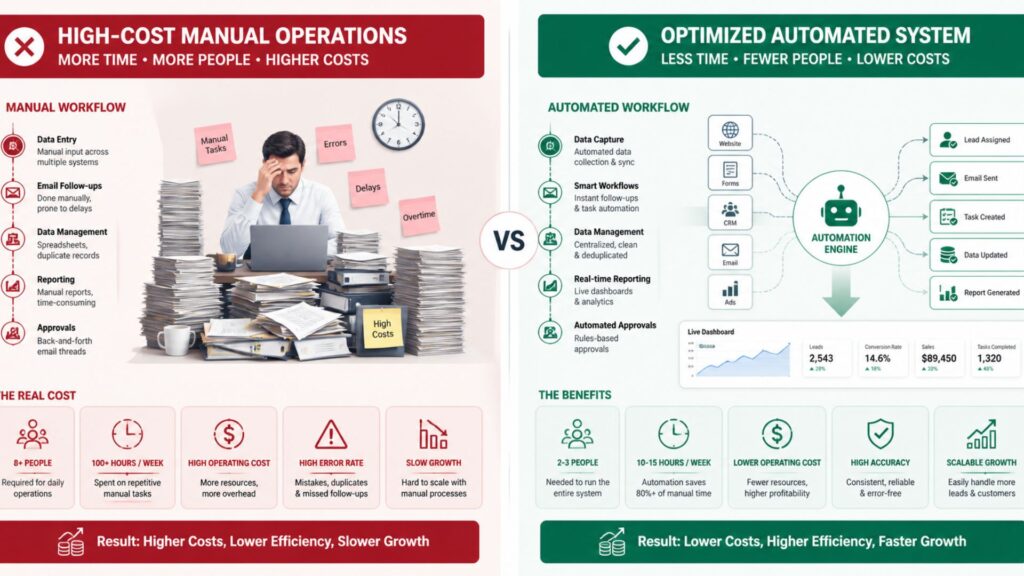
Businesses often turn to automation with a clear expectation: do more with less. The promise is simple—reduce manual work, eliminate repetitive tasks, and free up teams to focus on higher-value activities. In theory, this leads to faster execution and improved efficiency across operations.
Another common expectation is scalability. With the right workflows in place, companies believe they can handle higher volumes of leads, customers, or transactions without increasing headcount. Automation is seen as the bridge between current capacity and future growth.
Cost reduction is the third major driver. By minimizing human intervention and streamlining processes, businesses expect lower operational expenses and higher margins. However, these outcomes depend heavily on system maturity. Without structured data and reliable systems, automation may not deliver the efficiency gains it promises.
Where Automation Actually Helps

Automation delivers the highest ROI when applied to clearly defined repetitive tasks. For example, automatically assigning incoming leads to sales reps, sending follow-up emails, or syncing data between platforms eliminates manual effort and reduces human error. Instead of spending hours on routine updates, teams focus on closing deals and strategy.
In standardized workflows, automation ensures consistency and reliability. A structured onboarding sequence, invoice generation, or customer support ticket routing can run without variation. This not only improves efficiency but also creates predictable outcomes, which is essential for scaling operations.
For high-volume operations, automation becomes a necessity rather than a luxury. Processing thousands of leads, handling bulk email campaigns, or managing large datasets manually is inefficient and error-prone. Automated systems handle scale effortlessly, improving speed, accuracy, and overall performance.
When applied correctly, automation transforms operations from reactive to proactive, unlocking measurable gains in productivity and ROI.
Where Automation Starts Hurting
Automation can quietly introduce inefficiencies when the foundation isn’t solid. With poor data quality, automated systems process duplicates, missing fields, or inconsistent formats, leading to inaccurate outputs at scale. Instead of saving time, teams spend more effort correcting errors created faster than ever.

Broken integrations make things worse. When systems fail to sync properly, data gets lost, delayed, or duplicated across platforms. These silent failures often go unnoticed until performance drops, reporting becomes unreliable, and decision-making suffers.
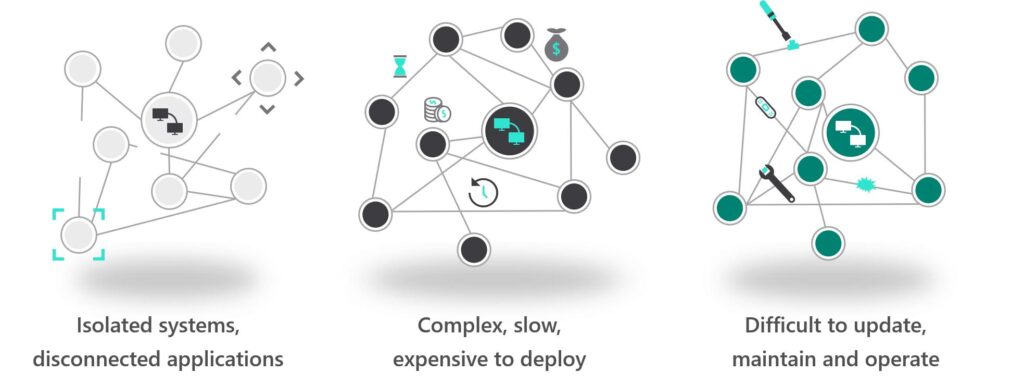
Over automation adds another layer of complexity. Too many workflows, triggers, and dependencies create fragile systems that are hard to debug and maintain. What once was simple becomes a tangled process where small issues cascade into major operational breakdowns.
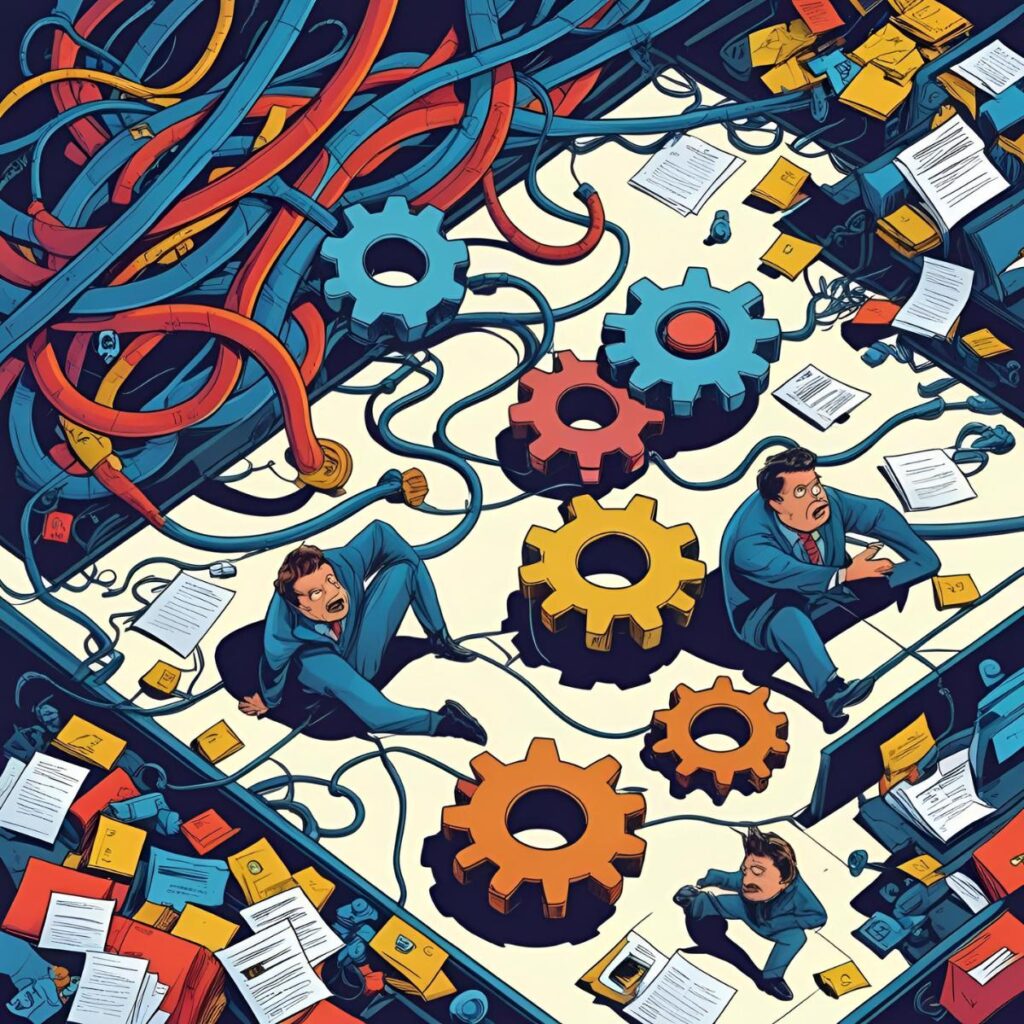
In the end, automation doesn’t just scale efficiency—it scales flaws. Without clean data and stable systems, it amplifies hidden problems that slow growth instead of accelerating it.
The Hidden Cost of Automation
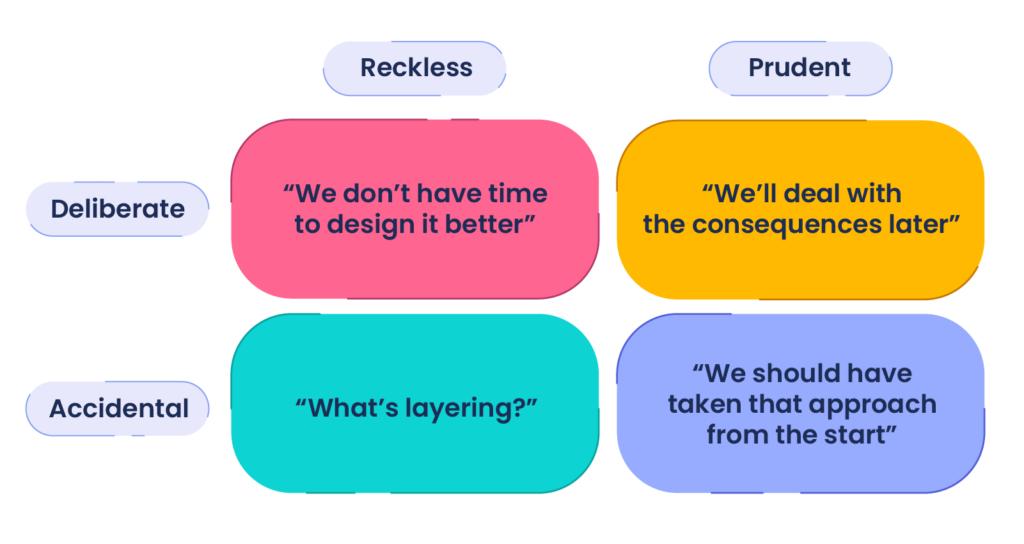
Automation often looks efficient on the surface, but underneath it can quietly accumulate technical debt. Every quick fix, undocumented workflow, or patched integration adds hidden complexity. Over time, these shortcuts make systems harder to maintain, slower to adapt, and more expensive to fix.
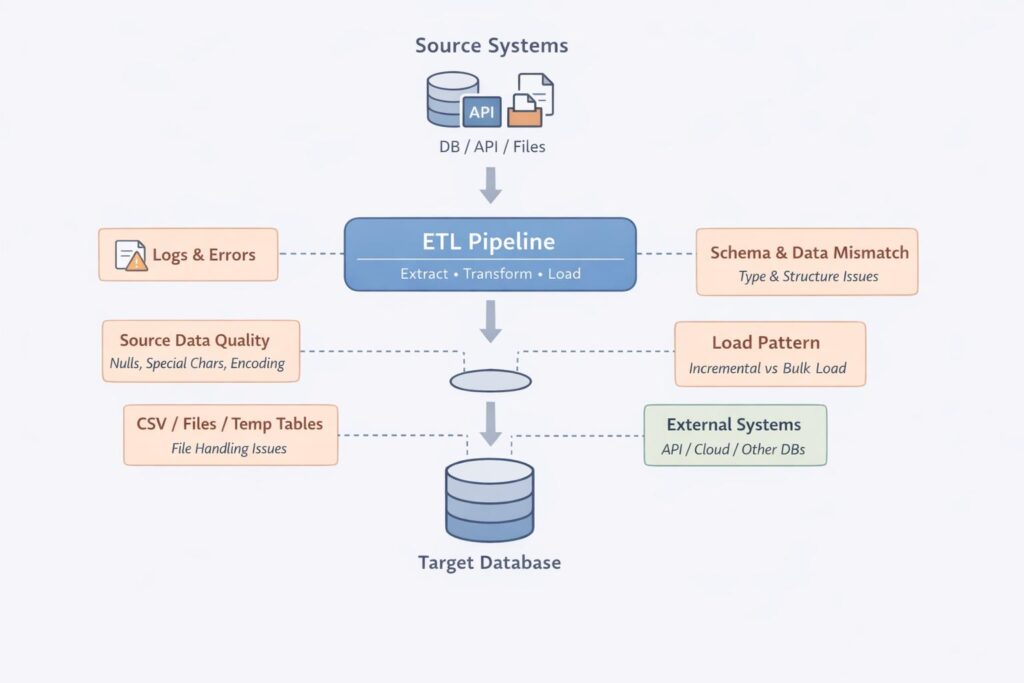
This leads directly to debugging complexity. When something breaks, it’s no longer a single issue—it’s a chain reaction across tools, APIs, and automations. Without proper logging or structure, identifying the root cause becomes time-consuming and frustrating, often requiring manual tracing across multiple systems.
The result is system fragility. What once worked reliably now fails under scale, data changes, or minor updates. Small errors can trigger larger disruptions, impacting performance and decision-making. Instead of enabling growth, automation starts creating risk.
Strong systems don’t avoid automation—they support it with clean architecture, clear processes, and controlled complexity.
Case Example
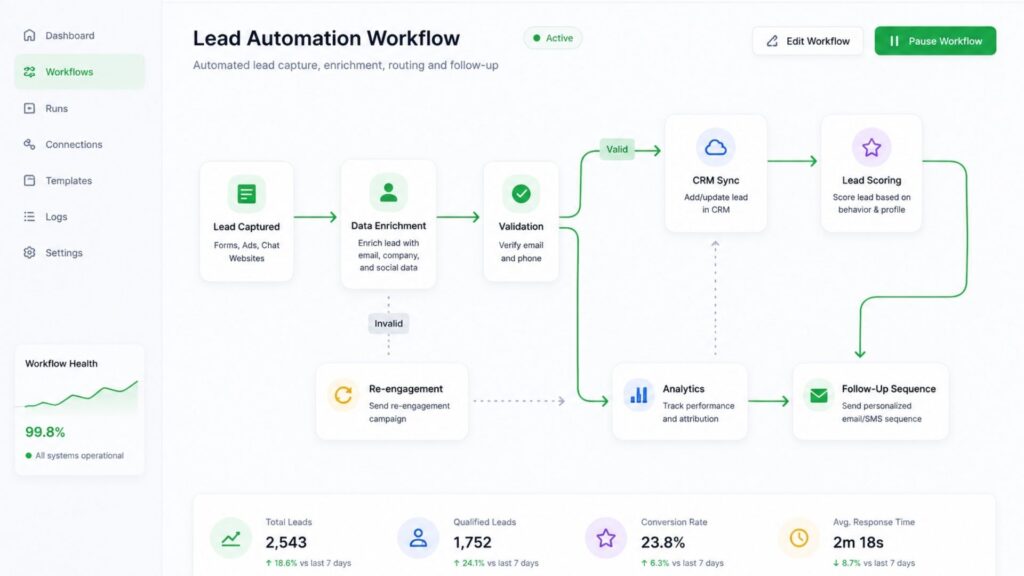
A lead generation business implemented automation to route, score, and follow up with incoming leads. On paper, everything looked efficient. In reality, performance dropped. Leads were duplicated, key fields were inconsistent, and some records were missing critical data. The automation didn’t fix these issues—it amplified them. High-quality leads were misrouted, low-quality leads were prioritized, and reporting became unreliable. The system was running, but outcomes were getting worse.
The team paused automation and focused on system cleanup. They standardized field names, removed duplicate records, enforced validation rules, and fixed broken integrations. Each data point was clearly defined, and ownership of workflows was assigned. Only after stabilizing the foundation did they reintroduce automation.
The results were immediate. Lead scoring became accurate, routing improved, and conversion rates increased. Automation finally worked—not because the logic changed, but because the data was clean. This proved a critical lesson: automation is only as effective as the data and systems behind it.
Automation Maturity Strategy
Most businesses don’t fail at automation—they skip the stages required to make it work. The first stage is manual, where tasks are handled by people, often inconsistently but with flexibility. This stage reveals real-world problems and edge cases.
The next stage is structured. Processes are defined, data fields are standardized, and workflows become repeatable. This is where a strong foundation is built and where most businesses should spend more time.
Only then does automation become effective. Repetitive tasks are handled by systems, reducing human effort and increasing speed. However, automation without structure often creates hidden errors and performance issues.
The final stage is intelligent. Here, AI enhances decision-making using clean data and stable systems. At this level, automation evolves into optimization. This maturity framework shows that automation success depends not on tools, but on how prepared the system is to support them.
How to Know You’re Ready for Automation
Before scaling automation, validate your foundation. Start by confirming your data is clean, consistent, and structured. If duplicate records, missing fields, or inconsistent naming exist, automation will amplify errors instead of improving efficiency.
Ensure your systems are connected reliably. APIs should be stable, workflows tested, and every automation traceable. If you can’t quickly identify where a failure occurs, you’re not ready for automation at scale.
Check if your processes are clearly documented. Every workflow should have defined steps, ownership, and expected outcomes. If your team relies on memory instead of SOPs, automation will introduce confusion rather than clarity.
Evaluate performance visibility. You should track conversions, errors, and system health in real time. If decisions are based on assumptions instead of data, automation will hide problems instead of solving them.
If these indicators are met, your business is ready to scale automation with confidence using a structured automation checklist.
Final Thought
Automation is often misunderstood as a solution. In reality, it’s an amplifier. It doesn’t fix broken processes—it accelerates whatever already exists inside your business.
If your systems are clean, structured, and consistent, automation increases speed, efficiency, and scalability. Tasks get completed faster, data flows smoothly, and decisions become more reliable.
But if your systems are messy, automation does the opposite. It spreads bad data, duplicates errors, and creates failures at scale. What was once a small issue quickly becomes a systemic problem.
This is why many businesses feel automation “doesn’t work.” The issue isn’t the tools—it’s the foundation. Automation simply exposes weaknesses that were already there.
Before adding more tools or workflows, focus on clarity: clean data, defined processes, and controlled systems. Once that foundation is strong, automation becomes a powerful growth engine—not a hidden liability.
Automation doesn’t fix systems. It amplifies systems.