


Automation is everywhere right now, but most teams are still struggling with a basic problem: information arrives late, in the wrong place, or gets ignored entirely.
Recently, we solved a real operational issue by automating incoming emails into Slack using n8n. On the surface, this looks like a simple workflow. In reality, it highlights a much bigger issue with modern systems — AI and automation only work when the underlying data flow is clean and reliable.
The Problem: Important Emails Were Getting Missed
We were receiving critical system and operational emails that needed immediate attention. These emails landed in shared inboxes, were checked inconsistently, and often caused delays.
This is a common problem across SaaS, finance, and e-commerce teams:
- Alerts arrive in email, not where teams actually work
- Manual monitoring doesn’t scale
- Important signals get buried in noise
No amount of AI tooling can fix this if the signal never reaches the right place.
The Solution: Email to Slack Automation with n8n
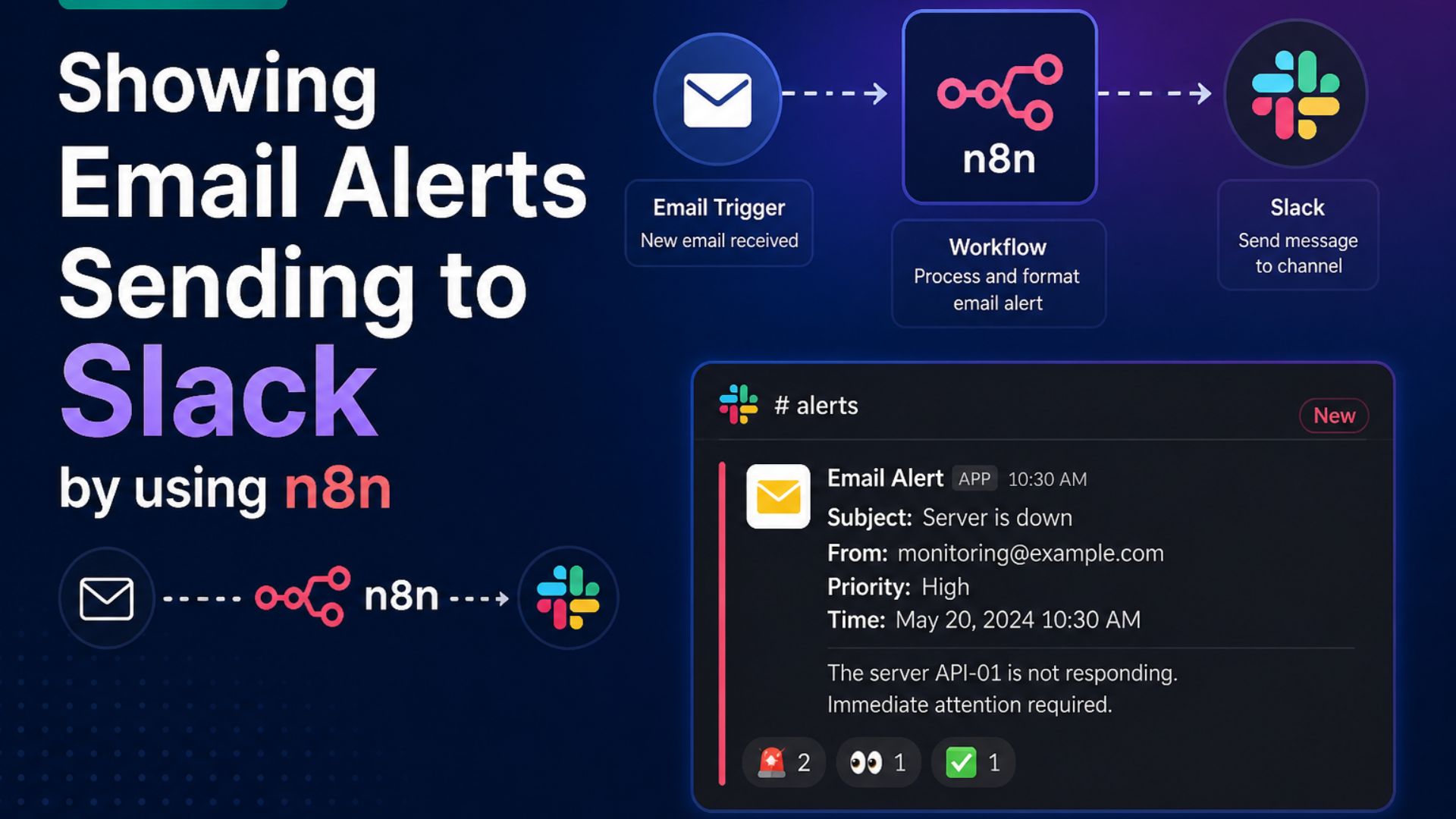
We built a lightweight automation using n8n that listens for incoming emails and posts structured messages directly into the appropriate Slack channels.
The flow looks simple:
- Email trigger receives incoming messages
- Key data is extracted and normalized
- Slack messages are posted with context and formatting
But the real value isn’t the workflow itself — it’s what this enables.
Why This Matters Beyond Notifications
This automation is not just about convenience. It’s about building systems that are ready for AI and advanced automation.
AI systems depend on:
- Timely data
- Consistent structure
- Clear ownership and visibility
If alerts live in inboxes and human memory, AI has nothing reliable to work with.
Where AI Fits (And Where It Doesn’t)
In this workflow, we intentionally did not start with AI.
First, we fixed the system:
- Reliable triggers
- Clean data extraction
- Clear routing to Slack
Only after that does AI become useful — for example:
- Summarizing long email content
- Detecting urgency or anomalies
- Routing messages based on intent
AI enhances clean systems. It does not replace them.
The Bigger Pattern We See
This exact issue shows up everywhere:
- Tracking systems feeding bad data into AI dashboards
- CRMs filled with inconsistent records
- Automations built on top of broken workflows
Teams jump to AI before fixing the foundation — and then wonder why results are inconsistent.
The Takeaway
If you’re thinking about AI, automation, or performance optimization, start by fixing how information flows through your systems.
Clean triggers, reliable data, and clear visibility are what make automation powerful — not the tools themselves.
This email-to-Slack automation is small, but it reflects how modern digital systems should be built: intentionally, reliably, and ready for what comes next.
About Bits Technology
We build AI-ready digital systems for SaaS, finance, and e-commerce brands, focusing on clean data, reliable automation, and performance-driven infrastructure.
Hi, this is a comment.
To get started with moderating, editing, and deleting comments, please visit the Comments screen in the dashboard.
Commenter avatars come from Gravatar.