


Why AI Fails Without Clean Data & Systems
AI is not a magical solution — it’s a multiplier. If your business already has clean data, documented workflows, and a clean system, AI can accelerate lead scoring, personalize marketing, automate CRM follow-ups, and improve decision-making. But when data is inconsistent, automations are broken, or teams rely on spreadsheets with duplicate records, AI simply scales those problems faster. Instead of improving operations, it creates more confusion, inaccurate reporting, and unreliable automation outcomes.
In marketing and lead generation, AI performs best when systems are structured correctly. A CRM with standardized fields and connected lead sources can use AI to identify high-converting prospects and optimize campaigns. However, if lead data is fragmented across platforms, AI-driven automation may route bad leads, trigger incorrect sequences, or damage customer experience. AI amplifies the quality of the foundation beneath it — whether that foundation is efficient or chaotic.
Real-World Case Study: When AI Made Operations Worse
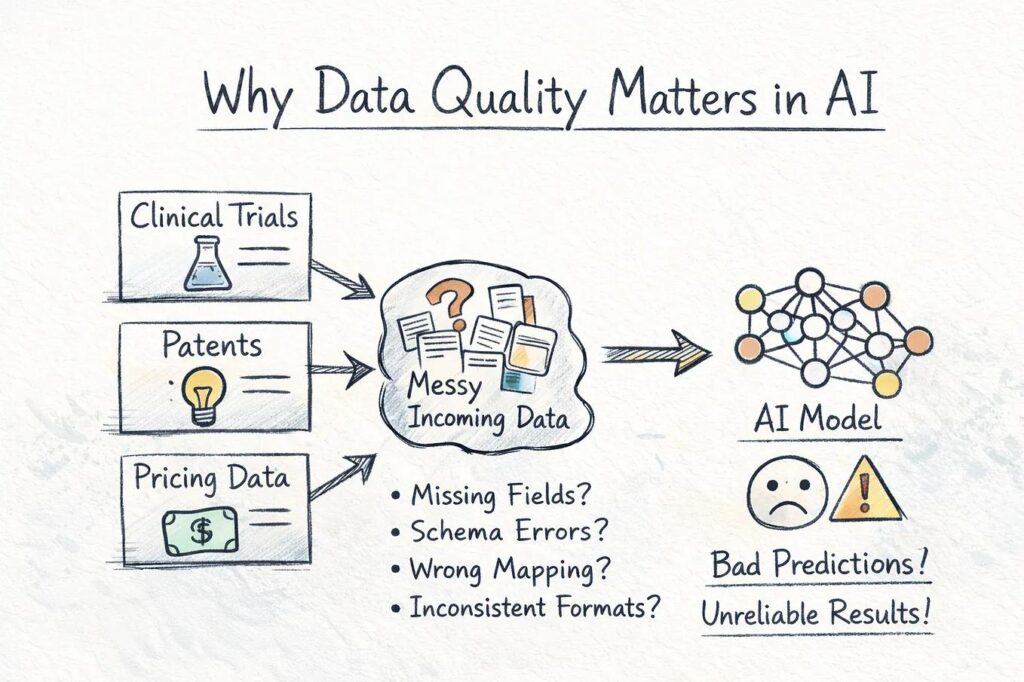
A regional lead generation company implemented AI to automatically score insurance leads and route them to buyers in real time. The system pulled data from multiple CRMs, spreadsheets, web forms, and third-party APIs. However, inconsistent field names, duplicate records, and missing timestamps created conflicting lead profiles. Instead of improving efficiency, the AI began routing low-quality leads to premium buyers while valid leads were delayed or rejected entirely.
Within weeks, operational chaos increased. Sales teams lost trust in reporting, automations triggered duplicate follow-ups, and revenue attribution became unreliable. After a full audit, the company discovered the issue was not the AI itself, but the lack of clean data and a clean system architecture. Once workflows were standardized and disconnected systems were rebuilt, AI performance stabilized and operational accuracy significantly improved.
Common Data Problems That Break AI
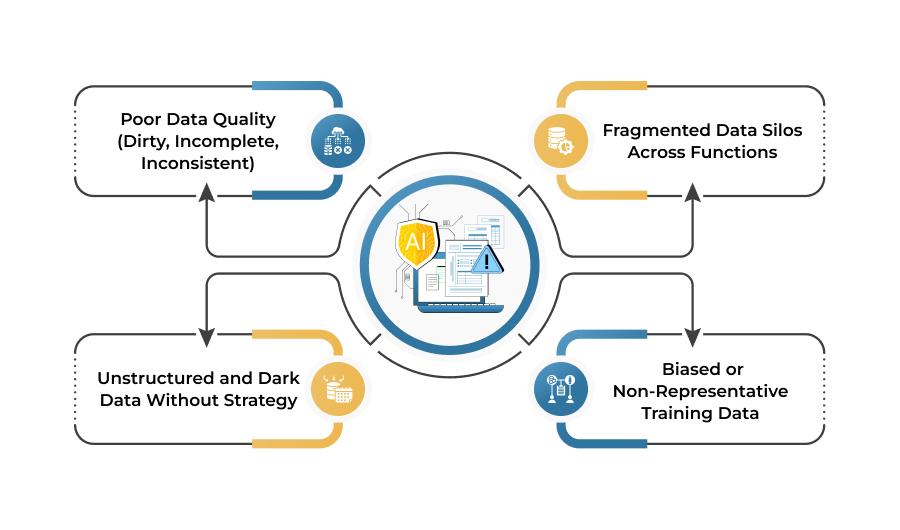
Many businesses struggle with common data problems that quietly damage automation and reporting performance. Duplicate records create conflicting customer histories, inconsistent field names like “phone,” “mobile,” and “contact_number” break workflows, while missing timestamps make tracking lead journeys unreliable. Without clean data, CRMs, dashboards, and AI systems begin making inaccurate decisions that reduce efficiency and increase operational confusion.
Fragmented integrations make the problem even worse. When marketing tools, CRMs, forms, and APIs are connected without proper structure, data becomes scattered across multiple systems with no single source of truth. Teams waste time fixing errors manually, automations fail silently, and performance reporting becomes inconsistent. Businesses often blame automation tools, but the real issue is poor system architecture and unmanaged data flow.
Why Systems Matter More Than AI

AI success is rarely determined by the model itself. Businesses that achieve reliable results usually have strong SOPs, structured CRM architecture, clean data standards, and clear automation governance already in place. When workflows are documented and systems follow consistent rules, AI can process information accurately, automate decisions, and improve operational efficiency without creating confusion or duplicated actions.
Most AI failures happen when companies ignore operational discipline and system maintenance. Poor CRM structure, disconnected automations, inconsistent data entry, and undocumented processes create unreliable outputs that AI simply amplifies at scale. Clean data and system matters are the real foundation of successful automation, forecasting, lead management, and AI-driven business growth.
The 3-Step Recovery Process
Before deploying AI, businesses must first create clean data standards across all systems. Field names, formats, and validation rules should remain consistent between CRMs, forms, spreadsheets, and APIs. Duplicate records, missing values, and outdated entries should be removed regularly through a structured recovery process that restores data integrity before automation scales the problem further.
Integrations should be stabilized before AI workflows are introduced. Businesses must monitor API connections, create error logging systems, and test automation scenarios in controlled environments. Reliable integrations prevent data loss, duplicate actions, and broken workflows that silently damage operational performance over time.
Documented processes are equally critical. Teams should create SOPs for lead handling, approvals, escalation paths, and exception management so both humans and AI systems follow the same operational logic. Clear documentation reduces confusion, improves accountability, and creates a scalable foundation for long-term automation success.
Recommended Tech Stack for AI Readiness
A reliable AI-ready business starts with the right tech stack. For CRM, tools like HubSpot and GoHighLevel help centralize lead management and customer communication. Automation platforms such as Make, Zapier, and n8n streamline repetitive workflows while reducing manual errors. For reporting and analytics, Looker Studio, Metabase, and Google Analytics provide visibility into performance, conversions, and operational bottlenecks.
Clean data remains the foundation of AI readiness. Documentation platforms like Notion and Confluence help teams standardize SOPs and workflows. Data-cleaning tools such as OpenRefine, Power Query, and spreadsheet validation systems improve accuracy before automation or AI deployment. Businesses that maintain structured systems, consistent naming conventions, and monitored integrations create scalable operations that support long-term automation success instead of technical chaos.
Final Thoughts
AI is not a shortcut for broken operations. It is a force multiplier that amplifies whatever already exists inside a business — good or bad. Without clean data, reliable workflows, and operational discipline, automation and AI only accelerate confusion, technical debt, and costly mistakes. Businesses that skip foundational systems often mistake activity for progress while performance quietly declines.
The companies seeing real AI success are not the ones chasing every new tool. They are the ones investing in structured systems, accountability, and long-term operational maturity. In the end, AI performs best when businesses first learn how to operate efficiently without it. Clean data and strong systems are no longer optional — they are the foundation for scalable growth.
AI & Automation Readiness Checker
Before you invest in AI tools, make sure your business is actually ready. Answer 16 questions across 4 categories to discover how ready your business is to implement AI and automation.
AI & Automation Readiness Checker
Answer 16 questions across 4 categories to discover how ready your business is to implement AI and automation.
Yes — you have this
No — gap identified
Not yet answered
0 of 16 answered
0%
0
Get your personalised AI readiness report
Submit your details and we’ll send a full audit with tailored recommendations based on your score.
Your score
—
Readiness level
Complete the checklist above
Answered
0 / 16
Please enter your first name
Please enter your last name
Please enter a valid email address
Please enter your company name
We respect your privacy.
No spam, ever.
No spam, ever.
Thank you! Your results have been submitted.